
Your Local Tree Experts, Specializing In Tree Removal Tree Trimming Stump Grinding Emergency Tree Services
Tree Trimming In Rincon
Clean Cuts, Full Cleanup, Same Day Quotes
What Rincon's Sandy Soil Does to Your Trees Over Time
How Effingham County's Ground Conditions Affect Tree Stability
Effingham County sits on a mix of sandy, loamy soil that drains fast and shifts after heavy rain – and if you’re getting tree trimming in Rincon done right, understanding that soil is part of the job. The ground here doesn’t grip root systems the way denser clay soils do further inland. Large oaks and loblolly pines, some of the most common trees in nearby residential areas, spread wide but shallow root systems that rely heavily on dry, packed earth to stay stable.
When a heavy rain softens that sandy ground, a tree with an oversized, heavy canopy puts uneven pressure on those roots. That’s where tree canopy management and crown reduction make a real difference. Removing excess weight from the upper canopy reduces the load the root system has to support, which matters more here than it would in firmer soil.
Structural pruning takes it a step further. Instead of just cutting back overgrown branches, it reshapes how the tree distributes weight so the root system isn’t being pulled in one direction. Good oak tree trimming and routine attention to pine tree health both help keep a tree structurally sound over time.
If you’ve noticed a large tree on your property starting to lean slightly after wet weather, it’s worth having someone take a look. Tree root health and canopy balance are connected in ways that aren’t always obvious from the ground.
Ask Us About Our Tree Trimming Services
Most People Think Any Tree Company Will Do. Here's Why That's Worth Reconsidering
What Full Cleanup Included Actually Means for Your Property
Plenty of people assume tree trimming and pruning is straightforward – you call a company, they cut the limbs, you’re done. That part’s mostly true. What catches people off guard is what happens after the cutting stops.
Many companies treat tree debris removal as a separate line item. You agree to a price, the crew does the work, and you walk outside afterward to find a pile of branches sitting in your yard. Moving that debris is suddenly your problem, or an added charge you didn’t see coming. That’s more common than most people realize when they’re comparing tree trimming cost estimates.
If you’ve gotten a quote from a larger regional company before, you probably noticed the estimate felt vague. Someone takes notes over the phone, maybe sends a form, and you’re left waiting. With a family-owned crew operating locally out of Brooklet, same-day quotes are just how it works. You get an actual person to look at your actual trees and a clear number before any work begins.
Every job includes full cleanup, not an add-on later. After your routine tree maintenance, the crew removes the branches, brush, and leftover material. Your yard looks like the work happened cleanly.
For residential tree service along the Highway 21 corridor or in the wooded stretches near Pine Barren Road, that straightforward process matters. A free estimate, no surprise charges, and a yard left in decent shape. That’s the whole point.

What Happens When Bragg's Shows Up to Trim Your Trees
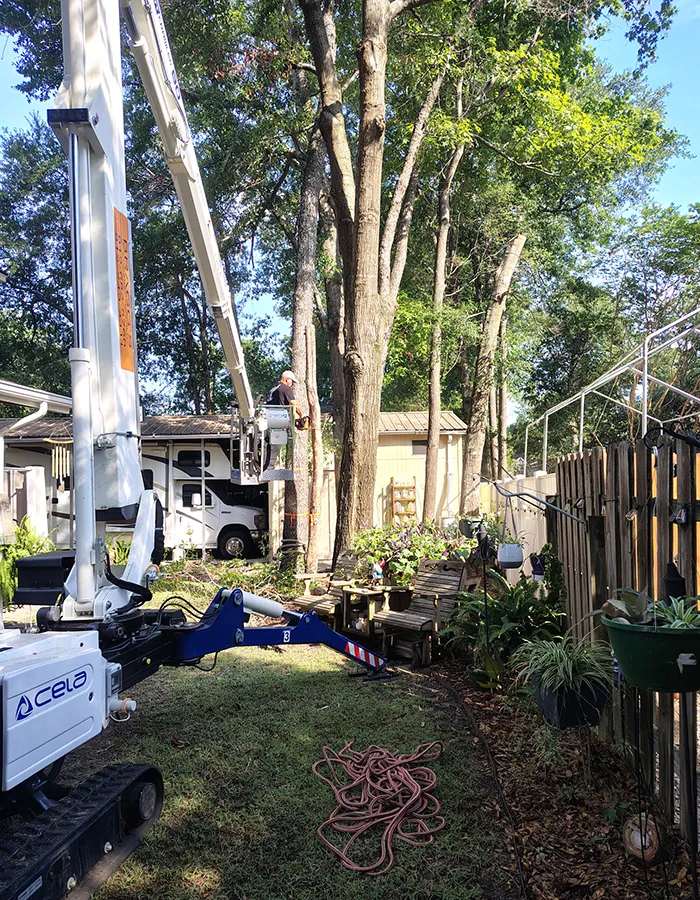
Every job starts with a tree health assessment before any equipment comes out. The crew walks the tree, reviews the branch structure, checks for dead limbs, spots visible signs of disease or stress, and notes how the canopy sits. A large oak near a roofline gets a different look than a pine standing 40 feet back from the house. That first look shapes everything that comes after.
From there, the trimming work begins. Deadwood removal comes first – clearing out the dead or dying branches that add weight without adding anything useful. After that, crown thinning opens up the canopy so air and light can move through it more evenly. If lower branches hang too close to a roofline, a fence, or a walkway, crown raising lifts the canopy by cleanly removing the lowest limbs. These aren’t random cuts – each one is made with the tree’s structure in mind.
You probably have at least one mature tree close to your property line or roof. Overgrown branches in that kind of tight space need careful, controlled cuts – not just a rough trim.
After the pruning, the crew cleans up. Every branch, every piece of debris comes off your property. You don’t haul anything. You don’t rake anything. The job isn’t finished until the yard looks the way it did before we got there – minus the problem limbs.
Trees That Go Untrimmed Don't Stay the Same. They Change
A Step-by-Step Look at the Tree Trimming Process in Rincon
Every job starts with a tree health assessment before any equipment comes out. The crew walks the tree, reviews the branch structure, checks for dead limbs, spots visible signs of disease or stress, and notes how the canopy sits. A large oak near a roofline gets a different look than a pine standing 40 feet back from the house. That first look shapes everything that comes after.
From there, the trimming work begins. Deadwood removal comes first – clearing out the dead or dying branches that add weight without adding anything useful. After that, crown thinning opens up the canopy so air and light can move through it more evenly. If lower branches hang too close to a roofline, a fence, or a walkway, crown raising lifts the canopy by cleanly removing the lowest limbs. These aren’t random cuts – each one is made with the tree’s structure in mind.
You probably have at least one mature tree close to your property line or roof. Overgrown branches in that kind of tight space need careful, controlled cuts – not just a rough trim.
After the pruning, the crew cleans up. Every branch, every piece of debris comes off your property. You don’t haul anything. You don’t rake anything. The job isn’t finished until the yard looks the way it did before we got there – minus the problem limbs.
Tree Removal
Safe efficient removals
Tree Trimming
For beautiful, healthy trees
Emergency Tree Services
Rapid response for emergencies
Stump Grinding
Stump grinding for a usable landscape
Trees That Go Untrimmed Don't Stay the Same. They Change
What Neglected Trees Look Like After a Few Seasons Without Maintenance
A tree you didn’t trim last year is not the same tree you’re looking at today. It grew. Branches extended further, the canopy got denser, and any weak or dead limbs that were there before got heavier. That process doesn’t stop.
Branches that hang over a roofline or fence line don’t stay in place. They keep pushing outward, adding weight and reach with every growing season. What starts as a minor overhang becomes a real tree near structures of concern, where the branch rubs against shingles or presses into a fence post. The tree isn’t doing anything wrong. It’s just doing what trees do.
Well-maintained trees have visible structure. You can read the shape. Neglected ones develop crossing limbs, dense interior canopies, and dead accumulation that builds up quietly over time.
Dead limbs don’t fall on a schedule. They weaken gradually, and a tree carrying too many of them eventually needs more than tree trimming. It moves into dead tree removal or large tree removal territory, which is a bigger job than regular maintenance.
That’s why tree risk assessment matters before problems become obvious. Spotting a structural issue early keeps the tree in better shape longer and usually keeps the job smaller. Hazardous tree removal is sometimes unavoidable, but it’s less likely when tree structure gets attention consistently.